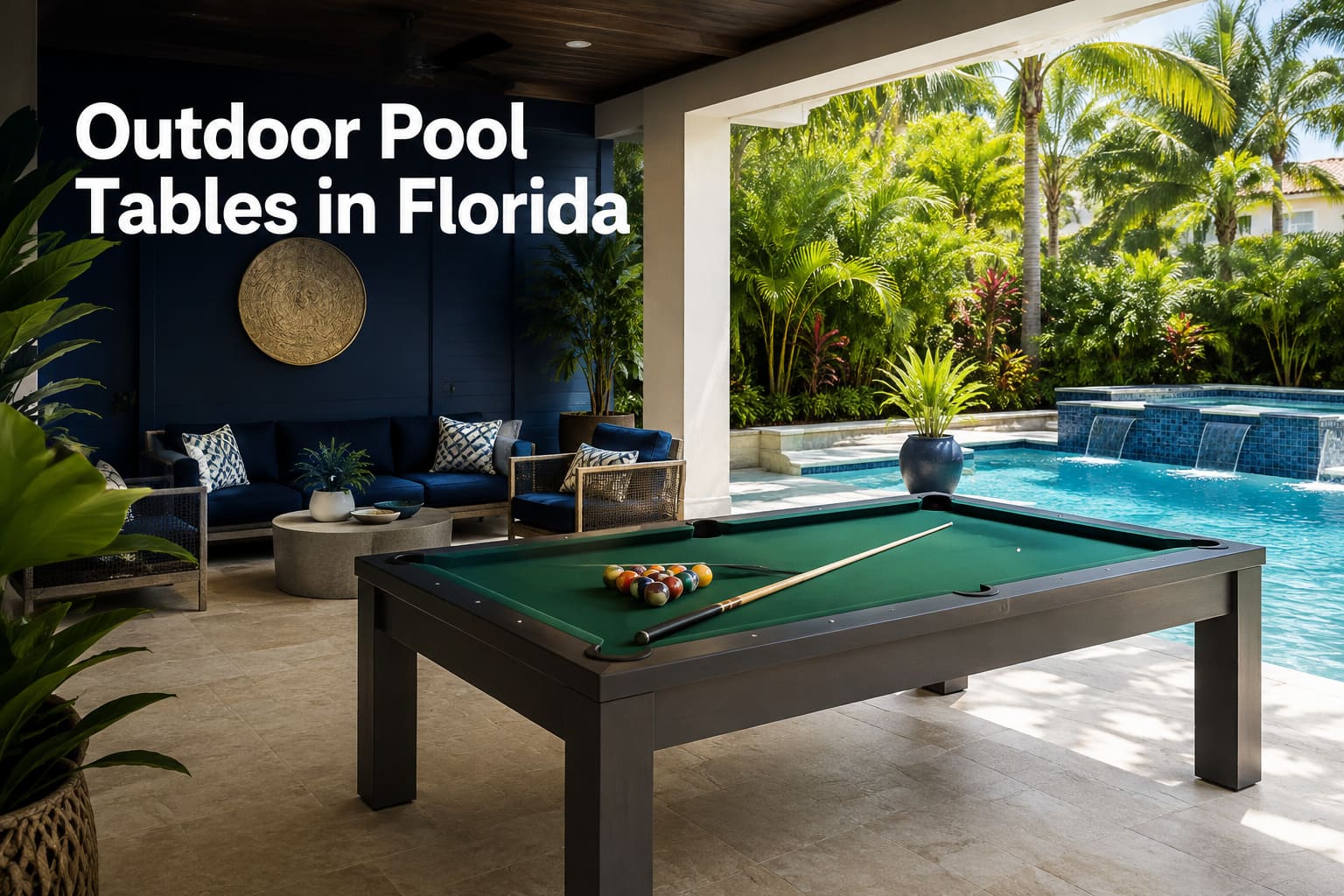
South Florida offers warm weather, beautiful patios, waterfront homes, covered lanais, and outdoor entertainment throughout much of the year. These features make outdoor pool tables an appealing addition to many homes, condominiums, resorts, clubhouses, and hospitality properties.
An outdoor pool table, however, should not simply be a standard indoor table moved onto a patio. Florida’s humidity, heat, rain, salt air, sunlight, and temperature changes require materials designed specifically for exterior environments.
Understanding the differences between indoor and outdoor pool tables can help customers protect their investment and choose equipment that performs properly in South Florida.
Why Standard Indoor Pool Tables Should Stay Indoors
Traditional indoor pool tables are often constructed with wood cabinets, wood framing, decorative veneers, interior-grade adhesives, and materials intended for climate-controlled spaces.
When exposed to outdoor conditions, these materials may experience:
- Swelling.
- Warping.
- Cracking.
- Finish damage.
- Corrosion.
- Mold or mildew.
- Cloth deterioration.
- Cushion damage.
- Structural movement.
Even a covered patio can experience significant humidity, wind-driven rain, condensation, insects, and heat.
Moving a standard indoor table outside may void warranties and shorten the table’s useful life.
What Makes an Outdoor Pool Table Different?
A purpose-built outdoor pool table is engineered with weather-resistant components.
Depending on the manufacturer and model, an outdoor table may include:
- Powder-coated aluminum.
- Marine-grade materials.
- Weather-resistant framing.
- Exterior-rated cloth.
- Rust-resistant hardware.
- Durable playing surfaces.
- UV-resistant finishes.
- Sealed components.
- Adjustable levelers.
The goal is to reduce the effect of moisture, sunlight, corrosion, and temperature changes while preserving the quality of play.
Slate and Outdoor Playing Surfaces
Slate is valued for its flatness, stability, and playing consistency. Some outdoor pool tables use slate protected by weather-resistant framing and exterior materials.
Other outdoor designs may use specialized alternatives engineered for exterior use.
Customers should ask about:
- The playing-bed material.
- The thickness of the surface.
- Weather resistance.
- Leveling requirements.
- Warranty terms.
- Recommended placement.
- Maintenance instructions.
The selected playing surface should support accurate ball movement and remain stable in the intended environment.
Outdoor Cloth Options
Indoor billiard cloth is not automatically suitable for outdoor use.
Outdoor tables need cloth designed to resist moisture, sunlight, mildew, and changing temperatures. The available cloth may feel different from traditional indoor worsted or woolen billiard fabric.
When selecting outdoor cloth, consider:
- Water resistance.
- UV resistance.
- Drying time.
- Colorfastness.
- Cleaning requirements.
- Playing speed.
- Manufacturer recommendations.
A darker cloth color may absorb more heat in direct sunlight, while very light colors may show dirt more easily. The surrounding design and amount of shade should also influence the choice.
Covered Patio vs. Fully Exposed Location
An outdoor pool table will generally receive more protection under a covered patio or lanai than in a completely open area.
A covered location can reduce exposure to:
- Direct rain.
- Falling debris.
- Strong sunlight.
- Bird droppings.
- Tree sap.
- Wind-blown dirt.
- Rapid temperature changes.
However, a covered area is not the same as an indoor climate-controlled space. Humidity and wind-driven moisture still matter.
For a fully exposed installation, choose a model specifically approved for those conditions and follow all manufacturer recommendations.
Why a Protective Cover Is Important
A properly fitted cover is one of the most useful accessories for an outdoor pool table.
The cover can help protect against:
- Dust.
- Pollen.
- Leaves.
- Insects.
- Moisture.
- Sunlight.
- Accidental spills.
- Animal activity.
The table should be clean and dry before the cover is installed. Trapping moisture underneath a cover may encourage mildew or corrosion.
Select a cover designed for the table’s dimensions and outdoor location. A cover that is too loose may lift in strong wind, while one that is too tight may be difficult to use.
Salt Air and Coastal Properties
Homes near the ocean or Intracoastal Waterway may experience increased salt exposure.
Salt can accelerate corrosion on metal components, fasteners, hardware, and accessories. Coastal owners should ask about corrosion-resistant materials and establish a routine cleaning schedule.
Wiping exposed components and keeping the table covered can help reduce buildup.
Even weather-resistant products require maintenance in a coastal environment.
Flooring and Drainage
The surface under the pool table must be strong, flat, and stable.
Suitable locations may include:
- Concrete patios.
- Properly reinforced decks.
- Covered lanais.
- Outdoor entertainment platforms.
- Commercial recreation areas.
The surface should not collect standing water underneath the table.
Before installation, evaluate:
- Drainage.
- Floor slope.
- Structural capacity.
- Surface movement.
- Access for delivery.
- Nearby irrigation.
- Roof runoff.
- Flood exposure.
Adjustable legs can help with minor leveling differences, but they cannot correct an unstable foundation.
Outdoor Pool Tables for Commercial Properties
Outdoor pool tables can provide valuable recreation for:
- Resorts.
- Hotels.
- Apartment communities.
- Condominium associations.
- Country clubs.
- Restaurants.
- Bars.
- Vacation rentals.
- Corporate campuses.
Commercial buyers should consider frequency of use, supervision, security, replacement parts, maintenance, and warranty coverage.
A durable table designed for repeated use may be more cost-effective than a decorative model that requires frequent repairs.
Design the Entire Outdoor Game Area
An outdoor pool table can be the centerpiece of a complete entertainment area.
The space may also include:
- Outdoor televisions.
- Bars.
- Dining furniture.
- Table tennis.
- Foosball.
- Seating.
- Fans.
- Lighting.
- Shade structures.
- Storage.
- Cue racks.
Select weather-resistant accessories and provide secure storage for cues, balls, chalk, and cleaning supplies.
Pool cues should generally be stored indoors unless they are specifically designed for outdoor exposure. Heat and humidity can affect wooden cues.
Maintenance Tips
Routine maintenance can extend the life of an outdoor pool table.
Recommended habits include:
- Keep the table covered when it is not in use.
- Remove leaves and debris promptly.
- Use approved cleaning products.
- Store balls and cues securely.
- Inspect hardware for corrosion.
- Check the table’s level periodically.
- Keep irrigation away from the table.
- Follow the manufacturer’s warranty requirements.
- Schedule professional service when the table no longer plays correctly.
Do not pressure wash the table or apply household chemicals without checking the manufacturer’s instructions.
Work With an Outdoor Pool-Table Specialist
Choosing an outdoor pool table requires more than selecting a color. The model should match the weather exposure, property type, playing expectations, and maintenance plan.
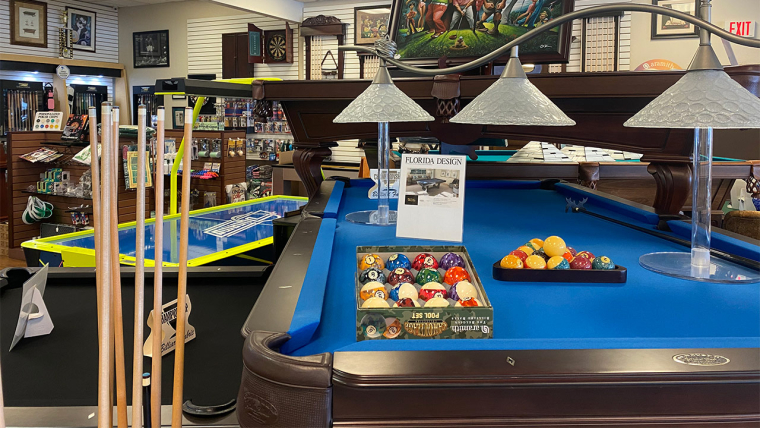
Boynton Billiards carries outdoor pool-table and game-table options and provides professional delivery and installation. Customers can review different models and discuss placement, flooring, access, cloth, covers, and accessories before making a decision.
Florida is an excellent place to create an outdoor entertainment area. With the right table and regular maintenance, homeowners and commercial properties can enjoy billiards while taking advantage of the South Florida lifestyle.