A welcoming game room needs somewhere comfortable to wait, watch, and talk between turns. Spectator seating helps people enjoy the room even when they are not holding a cue. The best arrangement supports the game while giving guests a natural place to settle without crowding the table or blocking everyday circulation.
Choosing game room seating is therefore both a furniture decision and a layout decision. A chair can look ideal in a catalog and still feel awkward in its intended position. For South Florida homeowners, planning around the room's actual activities is a useful way to narrow styles, proportions, and placement before shopping.
Decide what the seats need to support
Think about how the room is used on an ordinary evening. You may want two people to watch a game, a place for conversation, or seating that also serves a nearby bar. These uses can call for different furniture. Identify the main purpose before trying to select a single chair that does everything.
Consider the people who regularly visit. Some guests appreciate a supportive back and an easy place to rest their feet. Others prefer a lower seat for longer conversations. Ask household members what feels comfortable and recognize that identical seating throughout the room is not always necessary for a coordinated appearance.
Protect the space needed for play
Start with the table's playing requirements, then consider seating around that area. A chair's footprint includes more than the legs. Allow for someone sitting, standing, turning, or moving a chair away from the wall. A narrow gap that looks acceptable in a floor plan may disappear once a person occupies it.
Use removable floor markers to represent the proposed furniture and walk through the layout. Check whether a seated guest would be near a player's backswing or whether people must cross an active shooting area to reach their seat. Review uncertain clearances with a billiards specialist before ordering furniture for that location.
Evaluate the view from the chair
Imagine watching the game from the proposed seat rather than judging it only while standing. The table, other furniture, and room arrangement can affect what a guest sees. A higher spectator chair may suit one location, while a lower lounge chair works better in a separate conversation area away from play.
Sightlines should be considered alongside comfort and access. A seat with a good view is less useful if reaching it requires squeezing behind a player. Compare several possible positions before committing to a full set. Sometimes shifting a small side table creates a more useful arrangement than adding another large chair.
Compare seat proportions in person
When possible, sit in the actual model you are considering. Notice the seat depth, back support, arm placement, and foot support. A quick glance cannot tell you how the chair feels after a conversation. Check whether getting into and out of the seat feels practical for the people who will use it.
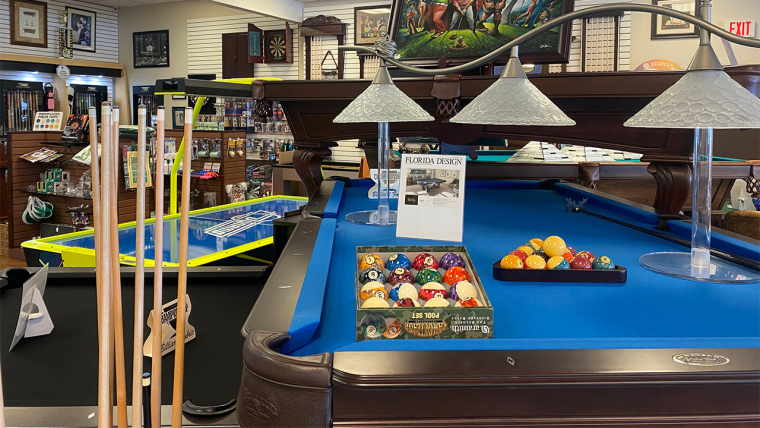
Read the product dimensions and any published use limitations. Ask about construction, care, and the options available for the exact model. If the showroom example differs from the configuration you intend to order, identify those differences. A sample finish or upholstery choice should be connected to a clearly identified furniture selection.
Coordinate materials without matching everything
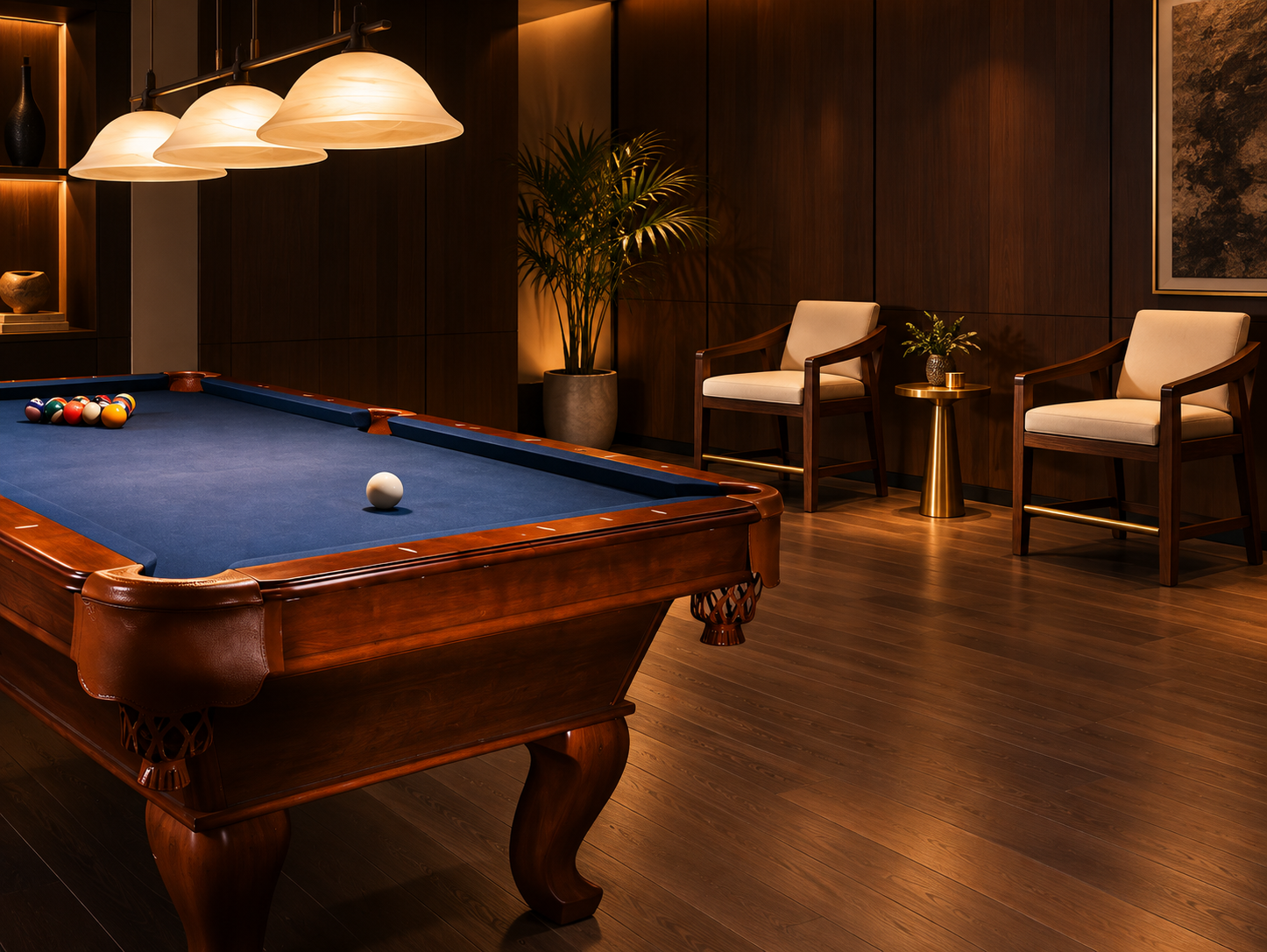
A pool table's wood tone, cloth color, and surrounding finishes can guide the seating palette. Bring photographs taken in normal room lighting so the showroom conversation starts with useful context. A warm wood chair, neutral upholstery, or restrained metallic detail can relate to the room without repeating every surface exactly.
Think about texture as well as color. Smooth wood, leather, woven fabric, and metal each create a different visual effect. Ask for the manufacturer's care guidance for the materials under consideration. Select finishes you are comfortable maintaining rather than assuming that all similarly colored upholstery behaves the same way in daily use.
Give small items a sensible home
Guests often arrive with a phone, glasses, or a beverage. Provide an appropriate nearby surface so the pool table does not become the default place to set things down. Position side furniture where it serves seated guests without projecting into the playing area or narrowing an important route through the room.
Check the arrangement with ordinary items in place. A lamp, decorative object, and several drinks can quickly fill a small tabletop. Decide what that surface is actually meant to hold. Keeping it useful and uncluttered makes the seating area feel considered while supporting the practical routines of a shared game room.
Test an evening with the proposed layout
Imagine two people watching a game while another guest walks from the doorway to the bar. Mark the proposed chair positions and follow that route. Then consider how the arrangement changes when a seated person stands up. This simple exercise can reveal a conflict that is easy to miss when every piece is represented only by an empty outline.
Try another arrangement before deciding that the room needs smaller furniture. Moving the viewing seats to a different wall may improve the path while preserving a comfortable conversation area. Keep the pool table's playing requirements central to the review rather than allowing the furniture to dictate where shots can be taken.
Bring both layout ideas to the showroom with photographs. A specific comparison gives the specialist something concrete to discuss and helps you explain why a particular chair shape or proportion appeals to you. Include the people who regularly use the room in that review. Their observations about comfort and movement may reveal a practical detail you overlooked, helping the final arrangement serve an enjoyable evening as well as the appearance of the space.
Choose a layout that works beyond photographs
Before ordering, review doors, storage access, walking routes, and the space needed to clean around the furniture. Confirm the exact pieces, finishes, quantities, and delivery arrangements. If you plan to add seats later, ask how to record the specifications, while recognizing that future availability must be checked when the time comes.
Boynton Billiards features game room furniture and seating among its product categories. Visit BoyntonBilliards.com to discuss your room, the games you enjoy, and the seating arrangement you have in mind. Bring measurements and photographs so the conversation can focus on furniture that supports both comfortable watching and enjoyable play.