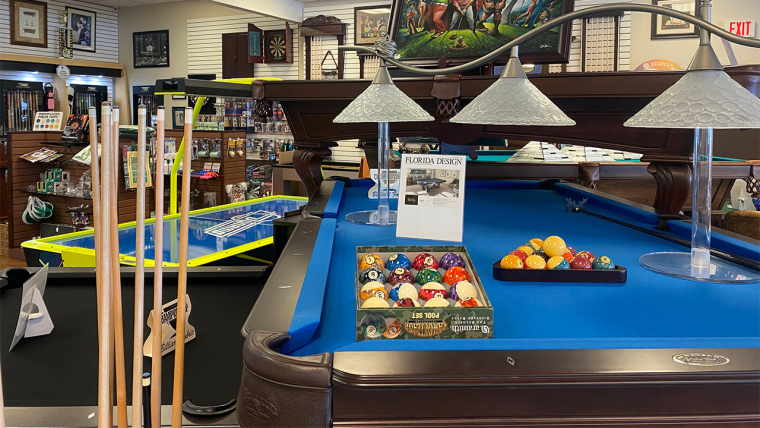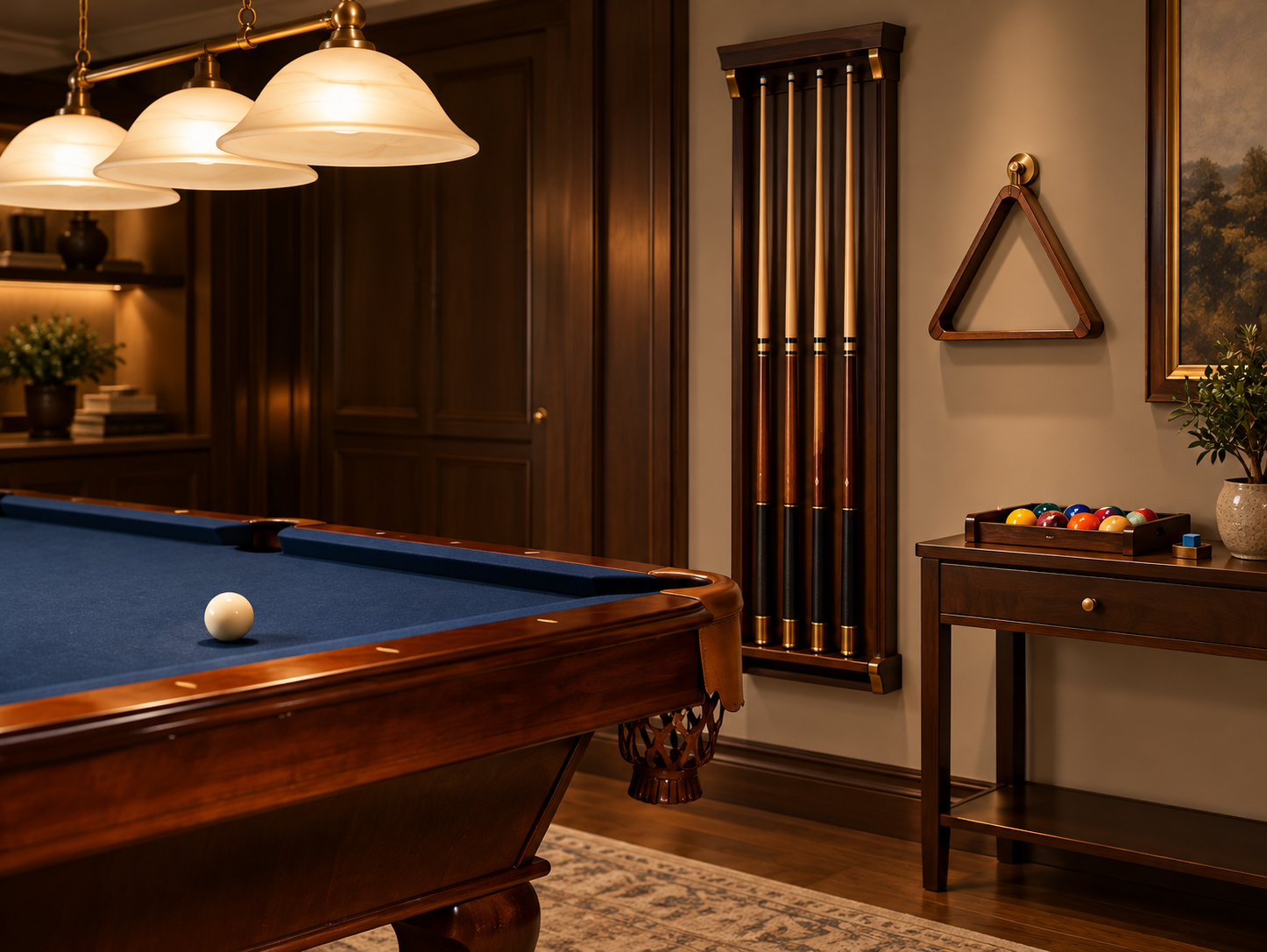
A new pool table becomes easier to enjoy when the surrounding essentials are ready too. Balls, cues, storage, and care items should work with the table and the people who will use it. Buying every accessory at once is less important than understanding what is included and what the household needs for an ordinary game.
For a first home setup in Boynton Beach or West Palm Beach, begin with a clear inventory. Then separate the items needed for play from optional additions and decorative choices. That approach helps you build a useful arrangement without assuming that every package, display photograph, or product description contains the same equipment.
Confirm what comes with the table
Ask for a written list of included accessories before buying additional items. A photographed cue rack, ball set, or light fixture may be shown for presentation rather than supplied with the table. Review the actual proposal and clarify the quantities, product descriptions, and any choices you must make before the order is complete.
If an accessory package is offered, evaluate its contents against your needs. A package can be convenient, but the name alone does not establish the specification of every item. Ask which components are included and whether substitutions are possible. Keep the final list with the table order so you can check the complete delivery.
Select a suitable ball set
Discuss the type of pool you plan to play and the ball requirements of the table or any ball-return system. Ask the retailer to confirm suitable options for the equipment you own. A familiar appearance is not a substitute for checking compatibility, particularly when replacing an incomplete set that came with a secondhand table.
Plan a sensible place to store the balls when needed. Follow the manufacturer's handling and cleaning guidance, and avoid applying an unrelated household product because it happens to create a shine. If you notice damage or a change in condition, ask about evaluation rather than mixing uncertain replacement pieces into the set without checking.
Choose cues for everyday players
Think about who will regularly use the room and whether they already own equipment. A household may need shared playing cues as well as storage for guests' personal cues. Discuss suitable lengths, preferences, and the room's layout with the retailer. Do not choose solely by appearance or assume every player wants the same feel.
Check what each listing represents. A complete cue, replacement shaft, and separate accessory are different purchases even when the product photographs look similar. Ask for help interpreting any unfamiliar specification. For a first setup, understanding the supplied equipment is more useful than collecting technical features that nobody in the household has requested.
Make racks and storage practical
A ball rack should suit the game and ball set you intend to use. Confirm the appropriate option instead of treating every shape as interchangeable. For cue storage, compare the number of cues the household expects to keep with the capacity of the proposed rack. Include room for future additions only if that fits your actual plans.
Position storage where it is accessible without intruding into the playing area. A floor stand occupies walking space, while a wall rack needs appropriate mounting and a suitable location. Follow the manufacturer's installation instructions and seek professional help where needed. Consider doors, furniture, and cue removal when reviewing the location rather than measuring only the rack itself.
Include the accessories that support play
Ask about suitable chalk and any other items recommended for the particular equipment. Keep small supplies in a defined place away from clutter on the rails. If a mechanical bridge or another playing aid would be useful, discuss an appropriate option and where it can be stored so it remains accessible without becoming an obstacle.
Avoid buying a maintenance tool simply because it appears in a large bundle. Some items require knowledge or may be unnecessary for your routine. Ask which tasks the owner should perform, which products are appropriate, and which work belongs with a service professional. An accessory is valuable when you understand its purpose and can use it appropriately.
Establish a care routine early
Request the table and cloth care instructions for the actual products installed. Keep those documents with your purchase records. A brush, cover, or other care item should be selected in that context rather than through a generic online checklist. Methods suitable for one surface or material may not apply to another component.
Decide where care products will be stored and who will handle the routine. Keep liquids and household cleaning supplies away from the playing surface unless a product and method are specifically approved for the task. If a spill or damage occurs, contact the appropriate specialist promptly and describe the situation before improvising a repair.
Build the shopping list from actual gaps
Imagine the table order includes a ball set and triangle but no cue storage. Rather than buying another broad accessory bundle, identify the missing storage need and compare suitable options. Note how many cues must be accommodated and where the rack could go without narrowing the route into the room.
Next, review the remaining items against the written order. If a product description is unclear, ask whether the item is supplied before adding it to the list. This prevents duplication and keeps the conversation focused on the equipment needed for a complete setup.
Retain the final inventory with the table records. It provides a useful starting point when an item later needs replacement or another household member wants to add equipment. An inventory also helps you explain an accessory question without relying on memory or assuming every item belongs to one package.
Add extras as your preferences develop
After using the room, you may discover that another cue position, better storage, or a particular playing accessory would be helpful. Keep a short list of actual inconveniences and address those first. This makes later purchases more focused and helps the room evolve around the games and gatherings your household genuinely enjoys.
Boynton Billiards offers billiards accessories and game room products. Visit BoyntonBilliards.com to discuss your table, existing equipment, and the items needed for your first games. A clear inventory and a few specific questions can help you create an organized setup that is ready for regular play.