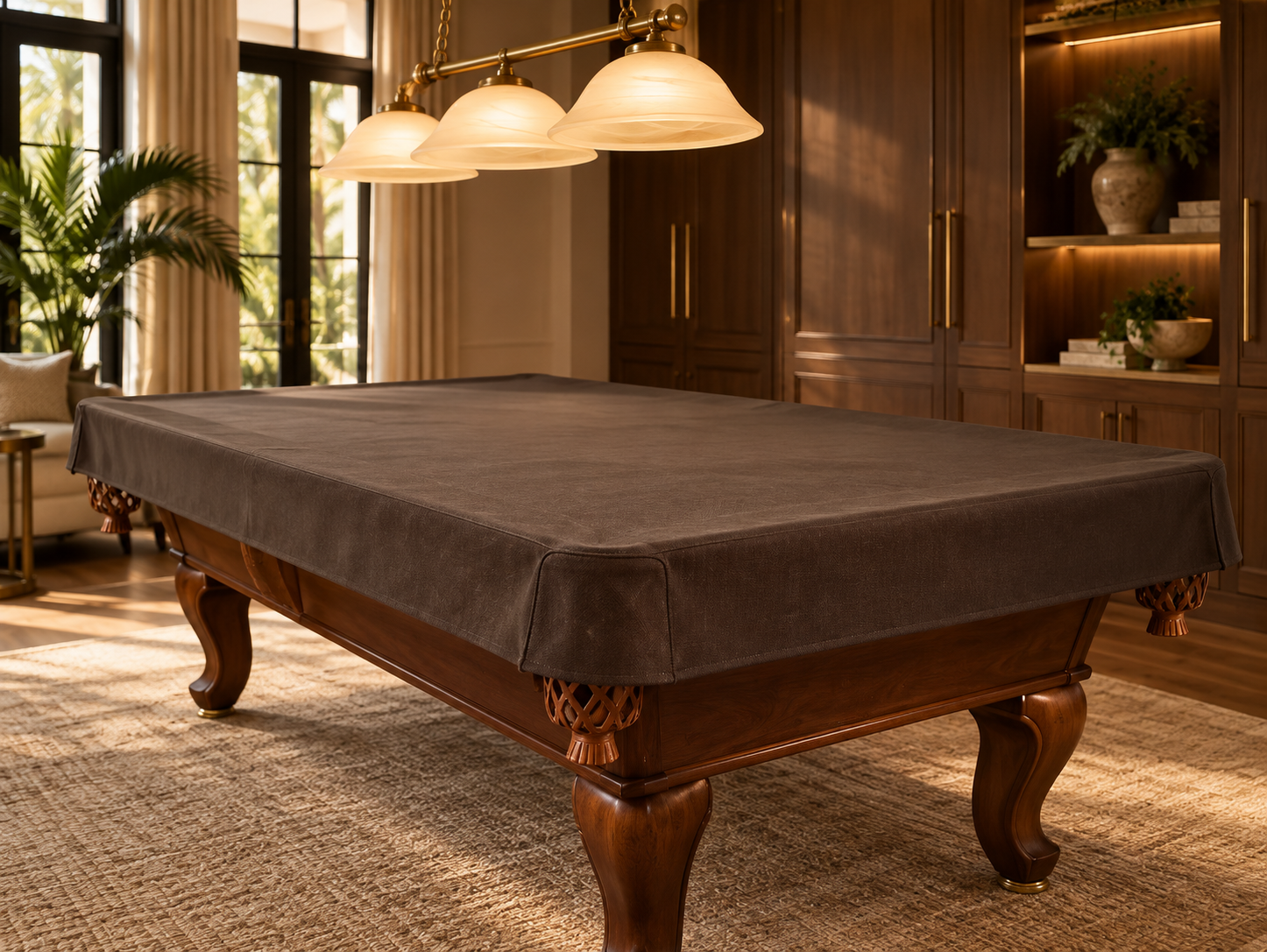
A pool table cover is a simple accessory with an important everyday role. When the table is not being used, a suitable cover can help protect it from dust and incidental exposure. Choosing one thoughtfully also makes it easier to establish a routine that keeps the game room looking organized between visits and family gatherings.
The right choice depends on the actual table, the intended environment, and the manufacturer's instructions. A cover that looks attractive online still needs to fit and be appropriate for its purpose. For South Florida homeowners, it is useful to discuss those details before treating any cover as a universal solution for table protection.
Identify the table and its dimensions
Start with the manufacturer and model when available. The table's advertised playing size may not describe the full exterior dimensions that a fitted cover must accommodate. Rails, pockets, and cabinet details can affect fit. Ask the retailer which measurements are needed for the particular cover rather than ordering from a general size label alone.
Record the requested dimensions carefully and provide photographs if useful. If you inherited or purchased the table secondhand, explain what is known and what remains uncertain. A specialist may need additional information before recommending an option. Clear identification is more helpful than assuming that every table described as the same size has identical outer proportions.
Clarify the protection you want
Think about where the table stands and what happens around it between games. Dust, nearby activity, and everyday handling may all influence your priorities. Explain whether you mainly want routine indoor coverage or are evaluating a product intended for a different environment. Ask what the proposed cover is designed to protect against.
Read any performance description in context. A material claim does not mean every seam, edge, or use circumstance has the same protection. Ask about limitations for the complete product and follow the applicable instructions. Avoid turning a broad marketing phrase into an assumption that the table can safely be exposed to anything once covered.
Keep indoor and outdoor requirements distinct
An indoor table does not become an outdoor table because a cover has been placed over it. The table itself and its components must be suitable for their location. If you are considering a patio or other exposed setting, discuss the complete setup with a billiards specialist before relying on an accessory to solve the environment.
Likewise, an indoor cover is not a substitute for managing the room appropriately. Continue following the table manufacturer's guidance about its surroundings and care. If you have concerns about moisture, sunlight, or another condition, raise them directly. A cover should be one part of a suitable routine rather than the only response to an unresolved issue.
Compare materials and handling
Ask how the cover's material should be cleaned, folded, and stored. Consider whether the people who use the room can handle it comfortably without dragging it over the floor or placing it on an unsuitable surface. A product that is straightforward to use is more likely to become part of the household's regular habits.
Discuss the underside and any features that contact the table. Follow the manufacturer's directions for fitting and removal rather than stretching a cover into place or adding improvised fasteners. If the fit seems wrong, stop and check the model and measurements. The goal is appropriate coverage without forcing an accessory around delicate or projecting details.
Give the cover a clean storage place
Decide where the cover will go while a game is in progress. A dedicated cabinet shelf or another appropriate clean location can keep it out of walking routes and away from drinks. Avoid leaving it piled where someone may step on it or where debris can collect on surfaces that later contact the table.
Keep the routine easy to explain to guests and household members. Remove the cover as directed, store it neatly, and put it back only under the conditions recommended for that product. If it becomes wet or dirty, follow its care instructions before reuse. Ask the retailer for clarification whenever a cleaning method is uncertain.
Do not turn the covered table into storage
A fitted cover is not automatically a load-bearing top. Avoid using the table as a convenient landing place for boxes, decorations, tools, or party supplies simply because the cloth is hidden. If you want a separate tabletop function, discuss a product expressly designed and confirmed for that use with the specific table.
This distinction matters during holidays and room rearrangements, when temporary storage can become a habit. Create another place for household items before they arrive in the game room. A clear covered surface communicates that the table remains playing equipment, while a growing pile of belongings makes it harder to return to a game.
Check the routine before choosing a style
Imagine removing the cover for a quick evening game. Where will it go, who will handle it, and can it be stored without crossing the busiest part of the room? Answering those questions can help you compare practical designs before color becomes the deciding feature.
If several people use the table, explain the routine once and keep the instructions available. A cover that is repeatedly left on the floor or pushed onto a chair beside refreshments may not be getting the care its manufacturer expects. Choose a storage location that makes the recommended handling straightforward.
Review the routine after a few weeks of use. Small changes to storage or organization can make appropriate coverage easier to maintain without adding complexity to everyday play. Ask for advice if the cover behaves differently from the instructions or seems unsuitable for the table after delivery.
Make care information part of the purchase
Before ordering, confirm the cover model, dimensions, material, intended use, included features, and applicable terms. Keep the instructions with the table records so future household members can find them. If a different cover is proposed because the first is unavailable, review its specifications again rather than assuming the substitute offers identical fit and performance.
Boynton Billiards can help you discuss accessories for your home billiards setup. Visit BoyntonBilliards.com with your table details and the measurements requested for a cover inquiry. Choosing appropriate protection and a practical storage routine can make it easier to keep your table ready for the next game.