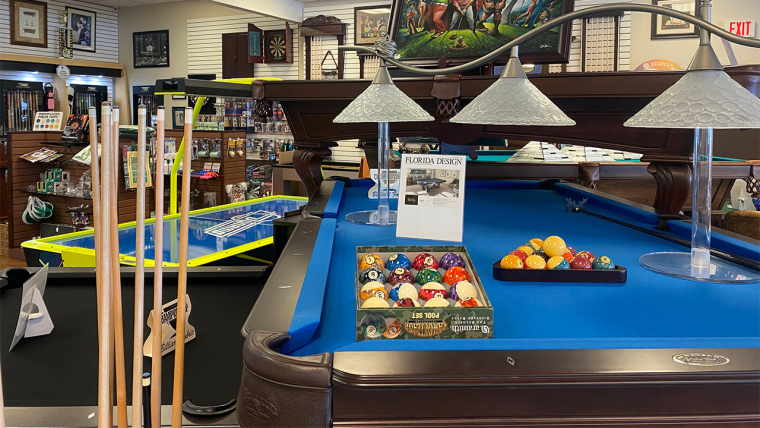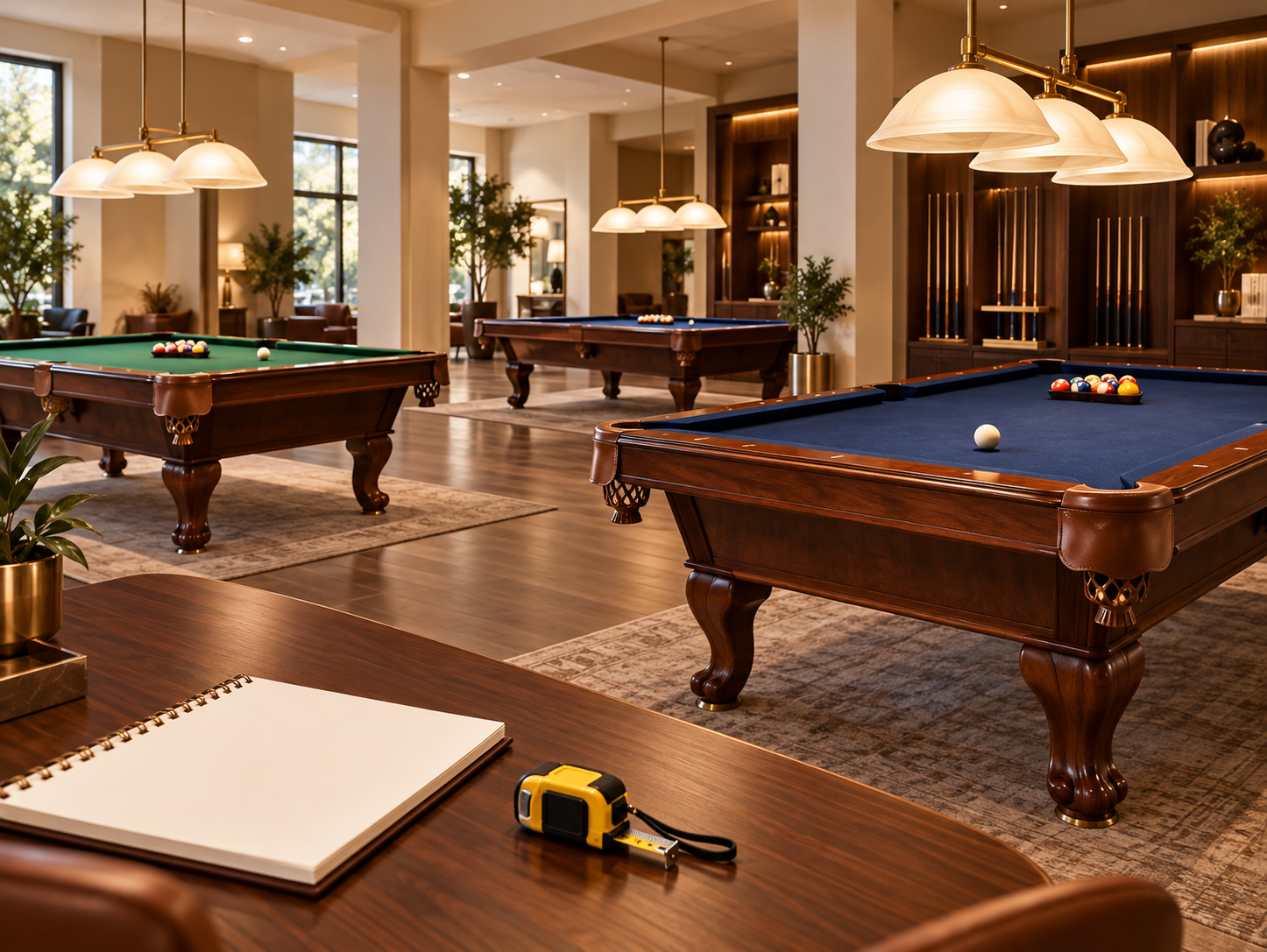
A pool table showroom visit is more useful when you arrive with a few details about your home and a clear idea of what you want to explore. You can still enjoy discovering styles and finishes, but preparation helps connect those first impressions with the room, budget, and everyday use that will shape the purchase.
For shoppers in Boynton Beach and West Palm Beach, the goal does not have to be choosing a table immediately. A productive visit can clarify options, identify missing information, and establish the next steps for a suitable setup. Bringing the right questions helps you leave with a comparison you can actually review.
Describe the room before choosing a table
Bring a simple plan showing the room's dimensions, doorways, windows, and fixed obstacles. Include furniture that must remain, such as a bar, cabinet, or built-in unit. Photographs from several angles can help explain details that are difficult to capture in a sketch. Mark uncertain measurements rather than presenting an estimate as confirmed.
Tell the specialist how the space is used beyond billiards. A room may also need seating, access to a patio, or a place for another game. These activities influence the layout. Discuss cue movement and circulation before becoming attached to a particular table size, especially when the room has corners or shared walking routes.
Explain who will use the table
Share whether the table is intended for casual family play, regular practice, entertaining, or a combination. Mention whether household members already own equipment or have preferences based on tables they enjoy elsewhere. This context helps the conversation focus on the experience you want rather than treating every shopper as if they had identical priorities.
You do not need a complete technical vocabulary. Explain what you like and what you would prefer to change about previous playing experiences. Ask the specialist to connect those observations with relevant product differences. Clear everyday descriptions can be a useful starting point for understanding options without pretending that you already know every specification.
Set a complete project budget
Think about the entire setup, including the table, selected configuration, delivery, installation, and any accessories or furniture you need. Tell the retailer what the budget is intended to cover. A table-only number can create confusion if you later discover that other essential parts of the project were never included in the comparison.
Ask for a written description of what each proposal contains. Identify optional additions separately so you can decide which ones matter now. Avoid assuming that a display's complete room arrangement represents a single package. A clear scope makes it easier to compare choices without confusing different products, services, or accessory quantities.
Bring photographs for the design conversation
Images of flooring, wall colors, nearby cabinetry, and existing furniture can make finish discussions more concrete. You may want a traditional wood table, a contemporary design, or something that relates to a particular room feature. Explain what appeals to you visually while staying open to options that also support the room's practical requirements.
Ask how available finish and cloth selections relate to the specific table under consideration. A sample or image should be connected to an identified product and configuration. Recognize that lighting and screens can alter color impressions. If a precise match matters, discuss an appropriate way to review samples rather than relying only on a phone photograph.
Ask to understand the differences
When comparing tables, request an explanation of the features that matter to your stated use. Keep notes on the exact models and configurations being discussed. If you are able to try an option, ask what is appropriate and note your own observations. Avoid assuming that price or appearance alone explains every difference between two tables.
Separate confirmed specifications from personal impressions. One table may suit the room's look while another raises a question about layout or configuration. Write those distinctions down. A useful visit does not require an immediate favorite; it should help you understand what each option offers and which questions need answers before a decision.
Review delivery and property access
Tell the retailer about stairs, elevators, long corridors, restricted parking, or building management requirements. Ask which photographs and measurements are needed for an access review. If the room is being renovated, explain the planned work and timing. Do not treat delivery as a detail to address only after every other choice has been finalized.
For a condominium, gather the current procedures from management and share them with the provider. Confirm who coordinates reservations and documentation. Ask about realistic next steps for the actual project rather than requesting a general promise. Availability, installation arrangements, and any special requirements should be confirmed for the chosen table and destination.
Bring a short list of priorities
Before the visit, choose the three outcomes that matter most to you. They might be comfortable family play, a particular visual style, and room for spectators. Put those priorities beside your measurements and project budget. This helps the conversation stay focused when several attractive tables compete for attention.
If an option meets two priorities but raises a concern about the third, record that tradeoff clearly. Ask whether a different configuration or layout could address it. Avoid treating the first appealing display as a complete answer before reviewing the practical questions you brought with you.
After the visit, compare the notes at home with the room in view. That final check can highlight missing information and make the follow-up conversation more specific. Keep the shortlist manageable and revisit your priorities before approving the complete order. A clear decision is easier when the information remains connected to your own room.
Leave with a clear follow-up list
Before leaving, identify the models considered, remaining measurements, proposed inclusions, and questions still awaiting answers. Ask how long any quotation applies and how availability should be rechecked. Keep the notes together so a later conversation begins with the same information. If a different configuration is suggested, review its differences rather than assuming the earlier comparison still applies.
Boynton Billiards has showroom locations in Boynton Beach and West Palm Beach. Visit BoyntonBilliards.com to confirm current visit arrangements and discuss the table or game room project you have in mind. Bringing room details, photographs, priorities, and specific questions can help you make the most of your showroom conversation.