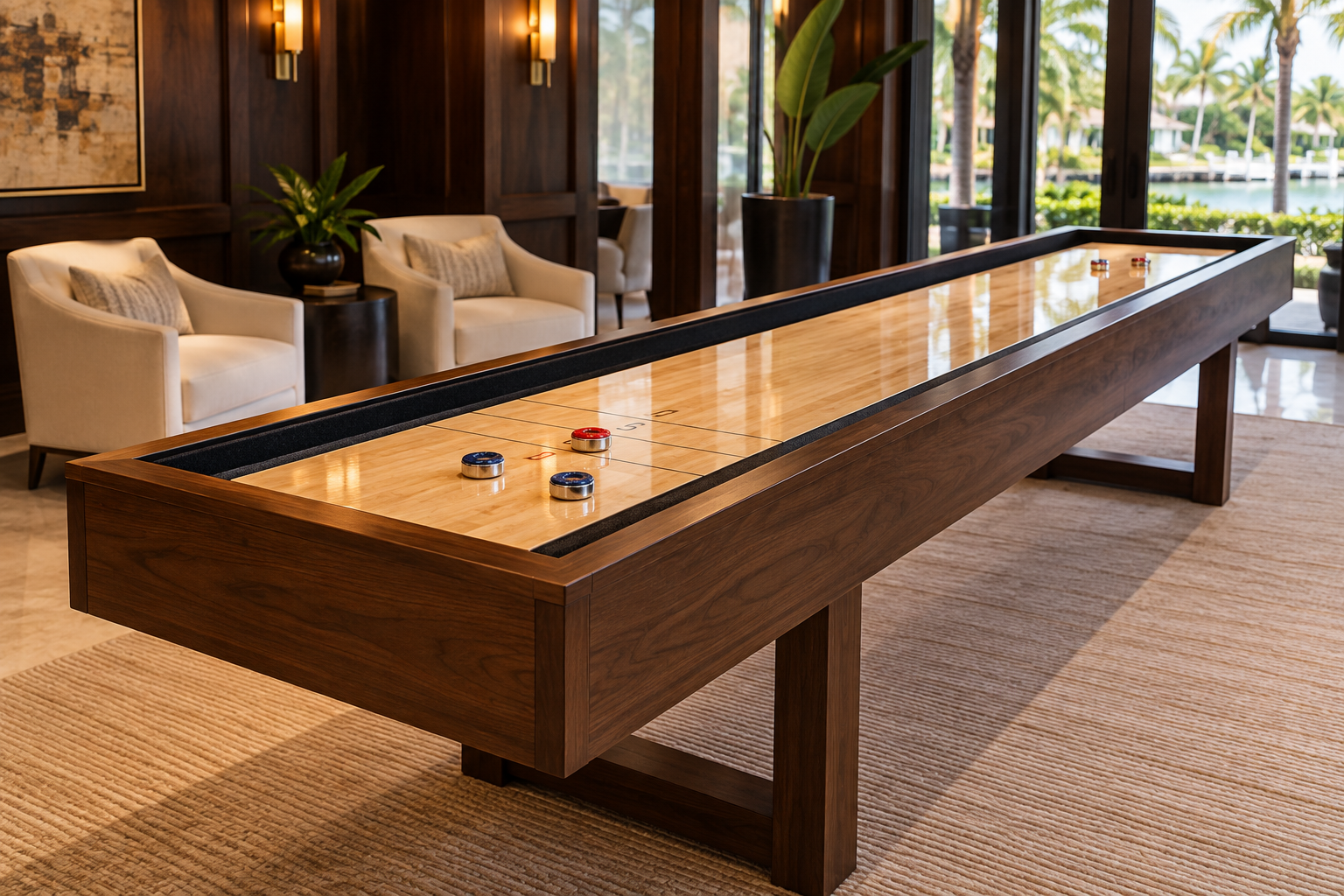
A home shuffleboard table invites casual games, friendly competition, and time together in the game room. Keeping it enjoyable begins with understanding the specific table you own. The playing surface, cabinet, pucks, and care products have different roles, and a maintenance routine should follow the manufacturer's guidance rather than a mixture of unrelated online tips.
Before applying a product, identify the table and ask what is appropriate for its finish and condition. This is especially useful after buying a secondhand table or moving into a home where the equipment was already installed. A careful starting point can help South Florida owners avoid treating every shuffleboard surface as if it were the same.
Identify the table and playing surface
Look for the manufacturer, model, and any available manual or purchase information. Keep the details together with photographs and service records. If the finish is uncertain, say so when requesting help. A glossy appearance alone does not establish which products should be used or how the surface was originally constructed.
Ask the retailer or manufacturer which current instructions apply to the identified table. Older equipment or a refinished playfield may require further discussion. Do not assume that a routine recommended for a friend's table transfers directly to yours. Establishing the correct reference information makes later product choices and service questions more focused.
Understand what each care product does
Shuffleboard powders, cleaners, polishes, and other products are not simply different names for one task. Manufacturers may offer distinct products for different purposes. Read the exact description and directions before use, and ask how the proposed item fits into the routine for your table. A familiar container shape does not establish compatibility.
Champion, for example, describes its Sun-Glo line as including shuffleboard powders, waxes, and care products. That illustrates why a complete product name matters when seeking advice. It does not mean every item in a manufacturer's range is appropriate for every table, every finish, or every maintenance task you might have in mind.
Keep cabinet care separate from playfield care
The outer cabinet and the playing surface can have different materials and maintenance requirements. A product suitable for furniture should not automatically be applied to the playfield. Check which component the instructions address, and keep the relevant products identified so another household member does not use the wrong item during routine cleaning.
Also ask about the pucks and other supplied accessories. Their care may involve separate guidance. Avoid using an abrasive tool or an improvised cleaning mixture on an unfamiliar material. When a mark or residue does not respond to the approved routine, describe it to a specialist before escalating to a stronger method on your own.
Establish a repeatable routine
Once the correct instructions are clear, decide who will handle the care and where the supplies will be stored. Keep directions accessible and retain original labels. A simple routine that household members understand is more useful than a collection of products with no record of how or when they should be used.
Follow the specified sequence, amount, and timing for the particular products rather than inventing a universal schedule. How the table is used may affect the conversation about routine care. Ask the manufacturer or a knowledgeable specialist to clarify any uncertainty. Avoid assuming that applying more of a product will necessarily improve the playing experience.
Notice changes without guessing the cause
If the table begins to play differently, note what you observe and when it started. Record recent product changes, relocation, or other relevant events. A clear account can help a specialist decide what questions to ask. Do not assume that adding powder or changing products will correct every concern about the way a puck travels.
Likewise, avoid adjusting unfamiliar hardware because an online video makes the task look straightforward. Table-specific construction and setup matter. Ask what assessment is appropriate and whether a service visit is needed. Observing the concern carefully is useful; attempting a correction before understanding the equipment can make the situation harder to evaluate.
Protect the table during everyday use
Keep food, drinks, and unrelated household items away from the playfield. Give guests a nearby appropriate surface for their belongings and explain the room's routine naturally. If a cover is recommended for your model, confirm its fit and use instructions. Protection works best when the surrounding habits support the equipment rather than creating new exposure.
Consider the room environment as part of the manufacturer's guidance. If you have questions about the table's location or a change in conditions, raise them directly. An accessory or care product should not be treated as a universal solution for an unsuitable setting. Discuss the complete situation instead of focusing only on the most visible symptom.
Ask a precise product question
Suppose you have a partly used container with an unreadable label and a table whose finish is uncertain. Applying the remaining product because it was stored nearby would leave two important assumptions unresolved. Gather the table information and seek guidance before using it.
A better inquiry identifies the manufacturer and model, explains what is known about the finish, and asks which exact product and instructions apply. If a recommendation includes several items, clarify the purpose of each one. Keep the answer with the original packaging rather than relying on a nickname such as table wax.
This simple record can be especially helpful when someone else buys replacement supplies. It keeps the request specific and makes any proposed substitute easier to review before use. When the answer remains uncertain, pause that task and ask again with the missing details. Appropriate guidance is more useful than an improvised maintenance experiment.
Keep useful records for future questions
Save the table identification, approved product names, instructions, and any service recommendations in one place. If a product is replaced with a different version, check the new directions instead of relying on memory. A short record can help you explain what has been used and avoid uncertainty when another person takes over the routine.
Boynton Billiards features shuffleboard tables among its game room products. Visit BoyntonBilliards.com to discuss your table and ask which resources or product information are appropriate for its care. Starting with the actual equipment and clear instructions helps you make informed choices about keeping your home shuffleboard setup ready for play.