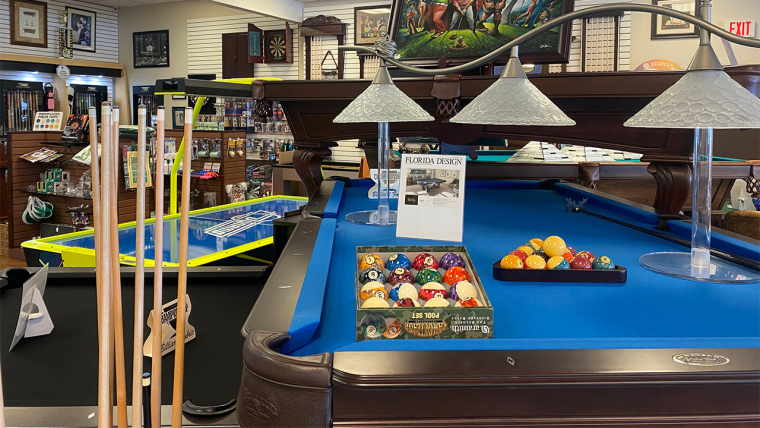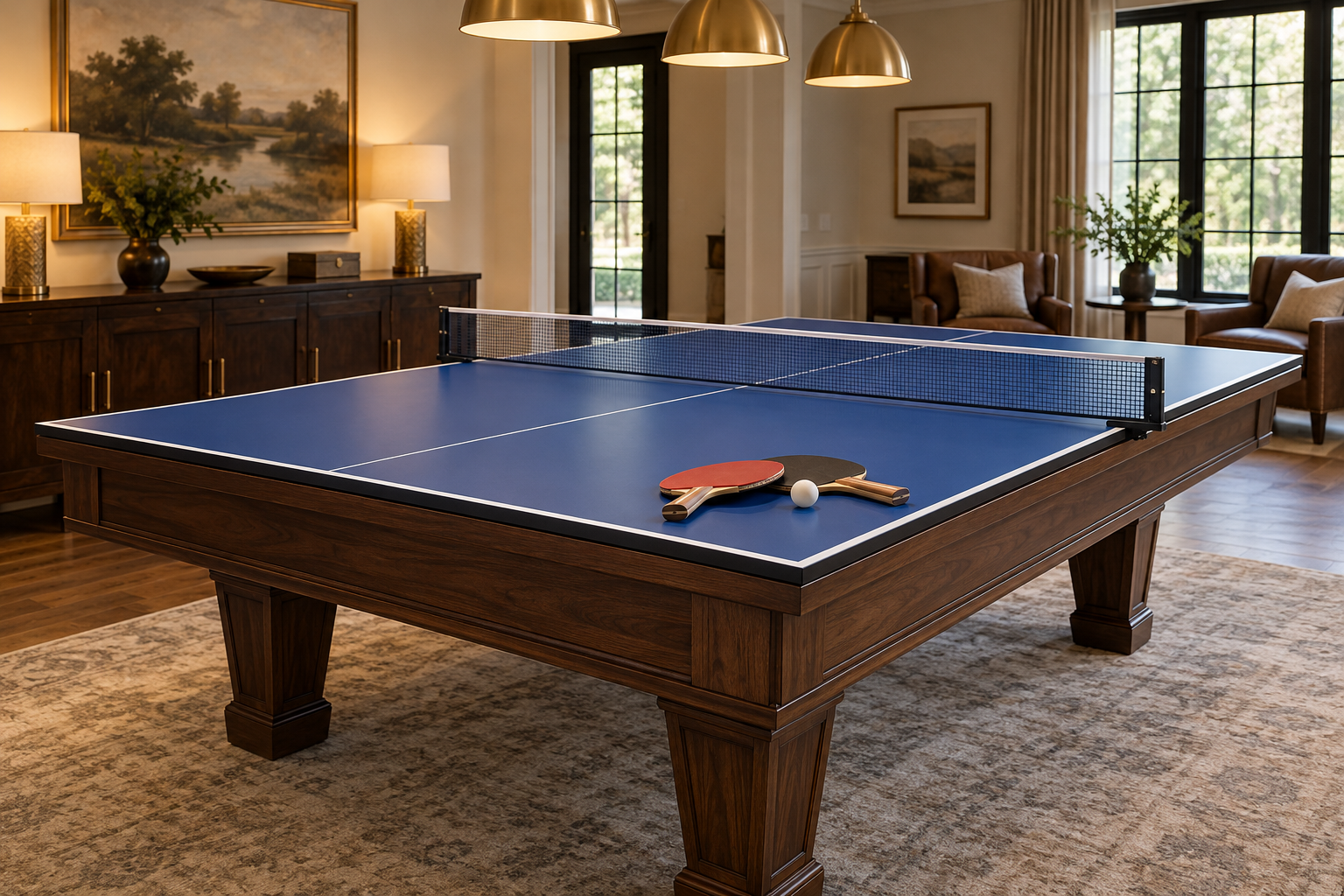
Adding table tennis to a game room does not always mean choosing another permanent table. A conversion top may let a suitable pool table serve a second activity, while a standalone table offers a separate setup. The better choice depends on the room, the equipment, and how often people want to switch between games.
For homeowners in Boynton Beach and West Palm Beach, the key is to evaluate the full routine rather than only the purchase price. Compatibility, handling, storage, playing space, and household preferences all matter. A flexible product becomes useful when changing games is practical for the people who will actually do it.
Start with how the household plays
Think about whether pool and table tennis will be played on the same evening or at different times. If two groups want to use both games simultaneously, a conversion top will not provide two independent playing areas. If the household usually chooses one activity at a time, sharing the footprint may be worth exploring.
Discuss who will handle the changeover and how often it will happen. Occasional use during family visits can create different priorities from frequent practice. Be realistic about the routine rather than assuming everyone will happily rearrange equipment every day. The most useful setup is one that suits the household's actual habits.
Confirm compatibility with the pool table
A conversion top should be evaluated against the exact pool table and the top manufacturer's requirements. Gather the table's identification and the requested exterior measurements. Ask about support, contact points, clearances, and any limitations. Do not assume that a familiar pool table size label guarantees that every conversion top will fit appropriately.
Review how the proposed product protects the underlying table and how its net assembly is fitted. Different designs can have different requirements. Follow the supplied instructions and seek clarification before installation if any step or contact point is uncertain. Avoid improvising supports or placing an unconfirmed top onto valuable playing equipment to see what happens.
Understand what the product includes
Read the exact listing for the top, net, mounting components, protective materials, and any other supplied items. For example, Butterfly's Martin Kilpatrick conversion top description identifies features specific to that product. Such information helps frame the questions, but it should not be generalized to every conversion top or treated as proof of local inventory.
Confirm the selected version, finish, dimensions, and included equipment with the retailer. Paddles, balls, storage accessories, or other items shown in a photograph may require separate purchases. A clear written list makes the comparison with a standalone table more meaningful because you can see what is actually included in each proposed setup.
Plan the changeover before buying
Ask about the top's weight, panel arrangement, and handling instructions. Identify how many capable people the manufacturer requires for setup and removal. Consider the route between the table and storage, including corners and doorways. Do not assume that a product described as removable will be comfortable for one person to move alone.
Choose a storage location that follows the manufacturer's guidance and keeps panels secure and protected. The space behind a door may look convenient but could expose the top to impact or obstruct access. Think through the complete sequence of preparing, playing, removing, and storing the equipment before deciding that the arrangement suits your room.
Check space for table tennis play
The footprint of the tabletop does not represent the full area players use. Consider movement at the ends and sides, nearby walls, seating, lights, and walking routes. Ask a specialist to help review the room for the kind of play you expect. A pool layout and a table tennis layout can place different demands on the same space.
Check the proposed arrangement with other furniture in everyday positions. Avoid solving a clearance problem by casually moving the pool table. If the layout cannot support both activities comfortably, explore another room or a different product arrangement. The purpose of the comparison is to find a workable option, not to force an attractive idea into an unsuitable location.
Compare the standalone alternative
A standalone table can give table tennis its own place and may offer features relevant to the household's use. Review the exact model's setup, folding, storage, and handling requirements rather than assuming every table behaves the same way. Consider where it will stand during play and where it will go when the room serves another purpose.
If a model has wheels or a folding mechanism, read the operating instructions and locking requirements. Discuss floor transitions and the route to storage. A compact storage description still needs to be checked against the available location. Compare the practical routine as carefully as the specifications that first attracted your attention.
Compare the routines side by side
Imagine one family member wants a quick pool game while another has left the conversion top ready for table tennis. Consider how the changeover would happen and whether the required help is available. This ordinary situation can reveal whether sharing the table supports your household or creates a recurring inconvenience.
Now imagine a standalone table in the same home. Identify its playing position, storage position, and the route between them. If that route is inconvenient or the room cannot support simultaneous games, the separate table may introduce its own compromise.
Neither scenario needs to decide the purchase alone. Use them to ask better questions about the actual products and to choose a routine the household understands before making space for new equipment. Discuss those observations with the retailer so the final comparison reflects your room, preferred games, and practical handling requirements rather than an assumption about everyday convenience.
Choose with the complete room in mind
Write down the benefits and unresolved questions for each option. Include compatibility, space, handling, storage, included accessories, care, and the activities that can happen at the same time. Confirm availability and terms directly for any product under consideration. A clear comparison helps keep the decision focused on daily usefulness rather than a single appealing feature.
Boynton Billiards features ping pong tables among its showroom categories. Visit BoyntonBilliards.com to discuss your existing pool table, room measurements, and interest in adding table tennis. Ask which options are currently available and what information is needed to evaluate a suitable setup for your home.