A pool table is not ordinary furniture. It is a precision playing system assembled from heavy structural components, slate, rails, cushions, cloth, pockets, hardware, and a cabinet designed to remain level.
Moving a pool table without proper disassembly can damage the slate, frame, cloth, flooring, doorways, and the people attempting the move.
Whether the table is being moved to another room, another home, storage, or temporarily removed during flooring work, professional planning is essential.
Why Pool Tables Are So Heavy
Many quality pool tables use a slate playing bed.
Slate is valued because it can provide a flat and stable playing surface. It is also extremely heavy.
Depending on the size and construction, a table may use:
- One-piece slate.
- Three-piece slate.
- Thick framed slate.
- Multiple supporting beams.
The cabinet and rails add substantial weight.
Trying to lift and carry an assembled slate pool table can cause structural twisting, broken joints, damaged legs, or cracked slate.
Never Drag a Pool Table
Dragging a pool table across the floor is risky.
It can damage:
- Table legs.
- Frame connections.
- Leveling hardware.
- Tile.
- Hardwood.
- Laminate.
- Carpet.
- Slate seams.
Even moving the table a few feet may affect its level.
If flooring is being replaced, the table should be professionally disassembled and removed from the work area.
Professional Disassembly
A trained technician generally follows a structured process.
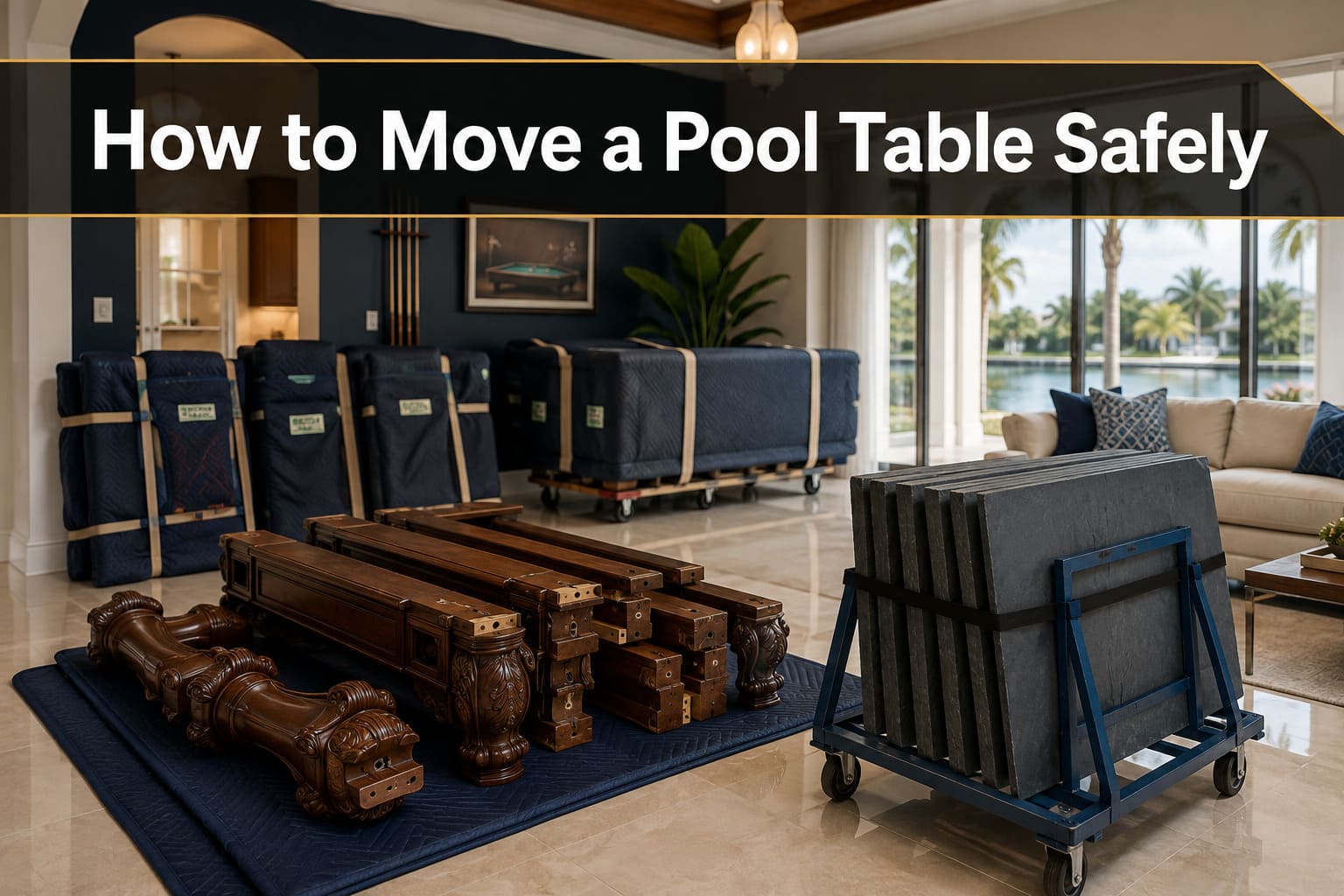
The exact procedure depends on the manufacturer and model, but may include:
- Removing pockets.
- Removing rails.
- Carefully detaching the cloth.
- Removing slate screws.
- Separating slate sections.
- Labeling components.
- Protecting rails and finishes.
- Disassembling the cabinet or legs.
- Packing hardware.
- Preparing the parts for transportation.
Photographs and labels can help ensure that components return to the correct positions.
Protecting the Slate
Slate should be moved carefully and supported correctly.
Although slate is strong when properly installed, it can crack or chip if dropped, twisted, or carried incorrectly.
Slate should be:
- Handled by trained movers.
- Protected with appropriate materials.
- Kept secure during transportation.
- Stored in a safe position.
- Prevented from striking other components.
- Inspected before reinstallation.
A cracked slate section may be expensive or difficult to replace.
Moving Within the Same Home
A table being moved from one room to another still requires professional attention.
Potential challenges include:
- Narrow doors.
- Hallways.
- Stairs.
- Floor transitions.
- Elevators.
- Tight corners.
- Uneven flooring.
- Low ceilings.
- New room dimensions.
The new location should be measured before disassembly begins.
The delivery path should also be inspected to determine whether components can be moved safely.
Moving for New Flooring
Pool tables often need to be relocated for:
- New carpet.
- Hardwood installation.
- Tile installation.
- Floor refinishing.
- Water-damage repair.
- Remodeling.
- Painting.
- Electrical work.
Coordinate the pool-table move with the flooring contractor.
The new floor should be fully cured, clean, and ready before the table is reinstalled.
If the table returns too soon, installation equipment or table weight could affect unfinished flooring.
Moving Into Storage
A pool table may be placed in storage during a renovation, relocation, or property transition.
Storage conditions matter.
Avoid locations with:
- Excessive humidity.
- Water leaks.
- Extreme heat.
- Pest activity.
- Unstable stacking.
- Poor security.
Cloth, rails, wood components, and hardware should be protected from moisture and impact.
The slate should be stored properly and clearly labeled.
Reassembly and Leveling
Moving the parts is only half of the job.
The table must be accurately reassembled.
A professional installation may include:
- Rebuilding the cabinet.
- Positioning the slate.
- Aligning slate sections.
- Sealing seams when appropriate.
- Installing or replacing cloth.
- Reattaching rails.
- Installing pockets.
- Leveling the table.
- Checking cushion response.
- Testing ball movement.
A table that looks level may not play level.
Technicians use precise tools and adjustments to address the floor and table structure.
Should the Cloth Be Replaced During the Move?
Cloth can sometimes be reused, depending on its age, condition, and how it was originally installed.
Replacement may be recommended when:
- The cloth is torn.
- The cloth is heavily worn.
- It has permanent stains.
- The owner wants a new color.
- The cloth cannot be removed cleanly.
- The room is being redesigned.
Replacing cloth during relocation can be convenient because the table is already disassembled.
Check Cushions and Pockets
Relocation is also an opportunity to inspect other components.
Ask the technician to check:
- Rubber cushions.
- Pocket condition.
- Rail bolts.
- Slate screws.
- Frame hardware.
- Levelers.
- Cloth.
- Decorative finishes.
Worn cushions may cause balls to rebound inconsistently. Damaged pockets may affect both appearance and play.
Avoid General Furniture Movers
A general moving company may be excellent at moving household furniture but may not specialize in pool tables.
Before hiring a mover, ask:
- Do you disassemble slate pool tables?
- Do you identify the manufacturer and model?
- Are you insured for billiard equipment?
- Will you reassemble and level the table?
- Do you move one-piece slate?
- Do you provide cloth service?
- Do you protect the slate and rails?
- Is the work guaranteed?
The lowest quote may not include all required steps.
Planning the New Location
Before moving the table, confirm:
- Room size.
- Cue clearance.
- Lighting.
- Floor strength.
- Doorway access.
- Electrical placement.
- Furniture layout.
- Moisture conditions.
- Traffic flow.
Moving a table twice because the first location does not work can add cost and risk.
Professional Pool-Table Relocation in South Florida
Boynton Billiards provides relocation services for moves within a home or office, between locations, to and from storage, and for flooring or remodeling projects.
The team can disassemble, transport, reassemble, level, and inspect the table.
A pool table is a valuable and highly specialized product. Professional relocation helps protect the equipment, the property, and the quality of future play.