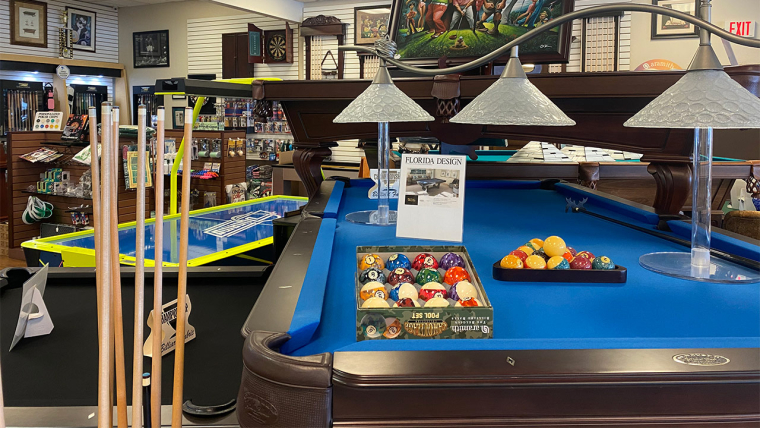
The cloth on a pool table influences appearance, speed, ball control, consistency, and overall enjoyment. Although many people refer to the playing surface as felt, quality billiard tables are commonly covered with specialized billiard cloth.
Over time, the cloth may become worn, stained, loose, slow, or damaged. Knowing when to replace it can help protect the table and restore proper play.
Some tables need new cloth because of heavy use. Others are recovered because the owner wants a different color, faster playing surface, or updated game-room design.
How Long Does Pool-Table Cloth Last?
There is no universal replacement schedule.
Cloth life depends on:
- Frequency of play.
- Quality of the cloth.
- Player skill.
- Chalk use.
- Cleaning habits.
- Pets.
- Children.
- Food and drinks.
- Sunlight.
- Humidity.
- Commercial or residential use.
- The condition of cues and balls.
A lightly used residential table may keep the same cloth for years. A pool hall, bar, clubhouse, or busy vacation property may require replacement much sooner.
Condition is more important than age alone.
Visible Wear Lines
Repeated ball movement creates wear patterns.
Common areas include:
- The break area.
- Spots near the head string.
- Rail edges.
- Pocket openings.
- Frequently used practice positions.
The cloth may appear thinner, lighter, fuzzy, or polished in these areas.
Minor wear may not immediately affect play, but significant thinning can change ball speed and increase the risk of tearing.
Tears, Holes, and Cuts
A tear or hole is a clear sign that service is needed.
Damage may be caused by:
- A damaged cue tip.
- Improper jump-shot technique.
- Jewelry.
- Sharp objects.
- Pets.
- Moving equipment across the table.
- Poor installation.
- Excessive wear.
Temporary patches may affect ball movement and appearance. Professional replacement usually provides a better long-term result.
Loose or Wrinkled Cloth
Properly installed cloth should be smooth and evenly tensioned.
Loose cloth may develop:
- Wrinkles.
- Ripples.
- Bunching.
- Movement near the rails.
- Uneven ball speed.
Humidity, age, installation problems, or table movement may contribute to looseness.
A technician can determine whether the cloth can be adjusted or should be replaced.
Slow or Inconsistent Play
Players may notice that the table feels slower than it once did.
The balls may:
- Lose speed quickly.
- Roll inconsistently.
- Drift over worn areas.
- React differently near the rails.
- Collect chalk and debris.
Dirty cloth can sometimes be professionally cleaned, but deeply worn or damaged material may need replacement.
Stains and Discoloration
Spills, chalk, sunlight, moisture, and household activity can discolor the cloth.
Some stains are cosmetic. Others may leave residue that affects the ball roll.
Common sources include:
- Drinks.
- Food.
- Hand oils.
- Cue chalk.
- Cleaning products.
- Water leaks.
- Pet accidents.
- Direct sunlight.
Avoid using household stain removers without professional advice. Certain chemicals can damage the cloth or leave a residue.
Fuzzing and Pilling
Some cloth develops visible fuzz, small fibers, or pilling as it wears.
Excessive fuzz can slow the table and collect chalk.
The playing characteristics depend partly on the cloth style. Woolen cloth and worsted cloth are not identical, so owners should not judge every material by the same appearance.
A billiard professional can explain whether the surface is wearing normally.
Cloth Replacement During a Move
Pool-table relocation is an excellent time to inspect the cloth.
The table must be disassembled and reassembled, providing access to the playing surface and rails.
Replacing the cloth during relocation may reduce duplicated labor compared with scheduling a separate service later.
Homeowners should consider new cloth when:
- The existing material is old.
- The room is being remodeled.
- The flooring is changing.
- The table is moving into a new design.
- The cloth is damaged.
- The owner wants a new color.
Choosing a Cloth Brand and Style
Pool-table cloth is available in different materials, speeds, colors, and grades.
Boynton Billiards provides cloth-replacement options that may include recognized billiard-cloth brands and custom or logo-cloth selections.
When comparing cloth, consider:
- Residential or commercial use.
- Preferred playing speed.
- Experience level.
- Table type.
- Maintenance.
- Color.
- Budget.
- Manufacturer requirements.
Competitive players may prefer a fast, consistent worsted cloth. Families may prioritize durability, value, and color selection.
Choosing the Right Color
Traditional green remains popular, but modern pool tables can use many different colors.
Potential choices include:
- Tournament blue.
- Navy.
- Gray.
- Black.
- Burgundy.
- Camel.
- Red.
- Custom colors.
The color should complement the room while maintaining good visibility between the cloth, balls, and lighting.
Very dark cloth may reduce contrast. Very light cloth may show chalk and stains more quickly.
What Happens During Professional Cloth Replacement?
A professional cloth-replacement service may include:
- Removing rails and pockets.
- Removing the existing cloth.
- Inspecting the playing bed.
- Cleaning the table.
- Installing new bed cloth.
- Recovering the rails.
- Reassembling the table.
- Re-leveling the playing surface.
- Checking pockets and cushions.
- Testing the ball roll.
Additional repairs may be recommended if the technician discovers worn cushions, damaged pockets, loose components, or slate issues.
Why Leveling Matters
Cloth replacement should not be treated as a cosmetic shortcut.
If the table is not level, new cloth will not correct the ball roll.
Professional service should include an inspection of the table’s level and playing condition.
A properly recovered and leveled table should provide smooth ball movement and a clean, finished appearance.
Protecting New Cloth
After replacement:
- Use quality chalk carefully.
- Keep food and drinks away.
- Brush or clean the table properly.
- Keep pets off the table.
- Use a fitted cover.
- Maintain clean billiard balls.
- Repair damaged cue tips.
- Avoid sitting on the rails.
- Follow the cloth manufacturer’s care instructions.
A cover can reduce dust, sunlight, and accidental damage when the table is not in use.
Schedule Pool-Table Cloth Replacement
Boynton Billiards provides professional cloth replacement, including recovering the table bed and rails, re-leveling, cleaning, and disposal of the old material.
The team can help customers compare cloth brands, colors, speeds, custom options, and service requirements.
If a pool table looks worn or no longer plays consistently, new cloth can dramatically improve its appearance and performance.